6.8–62%
of lab results went without follow‑up, across 19 ambulatory‑care studies.
Callen et al., 2012 · US studiesThe lab makes sure the result arrives.
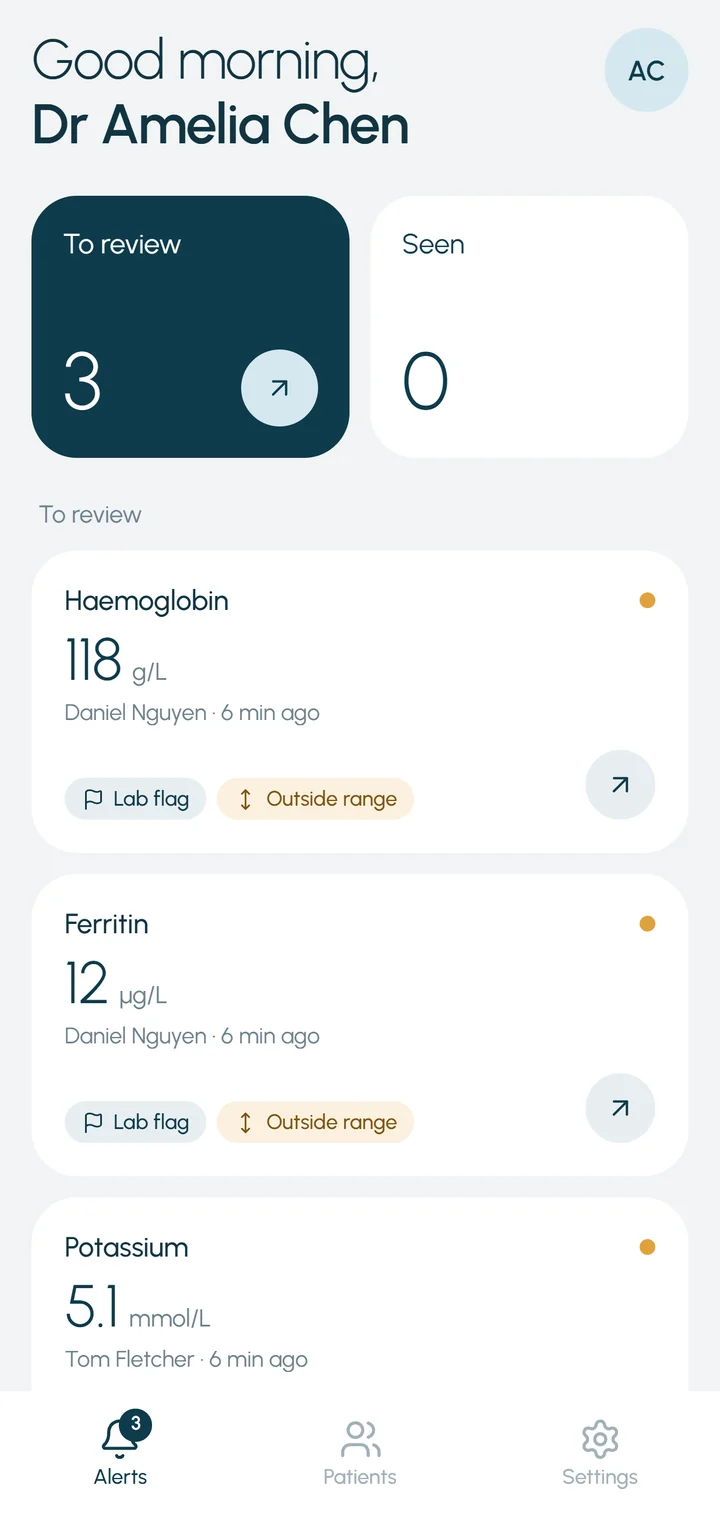
A safety net for blood test results in Australian general practice. BloodLine reads every incoming report and lets you know when a result may need review.
Labs deliver the result, and phone through the critical ones. After that, follow‑up rests on a busy inbox and a process that usually works. Some results are never acted on.
of lab results went without follow‑up, across 19 ambulatory‑care studies.
Callen et al., 2012 · US studiesjump in patients viewing their pathology and imaging reports, in the first week they were shared by default.
Australian Digital Health Agency, 2026of practices run Best Practice, the first practice software BloodLine plans to connect with.
AIHW, PIP QI practices 2025–26From the lab, into your practice software, as it does today.
Exactly what's printed on the report. Nothing is interpreted.
Lab flag, printed range and your rules. The same answer every time.
In the app, with a nudge by email, SMS or call. Messages never carry patient details.
Every check, message and action goes into the audit trail.
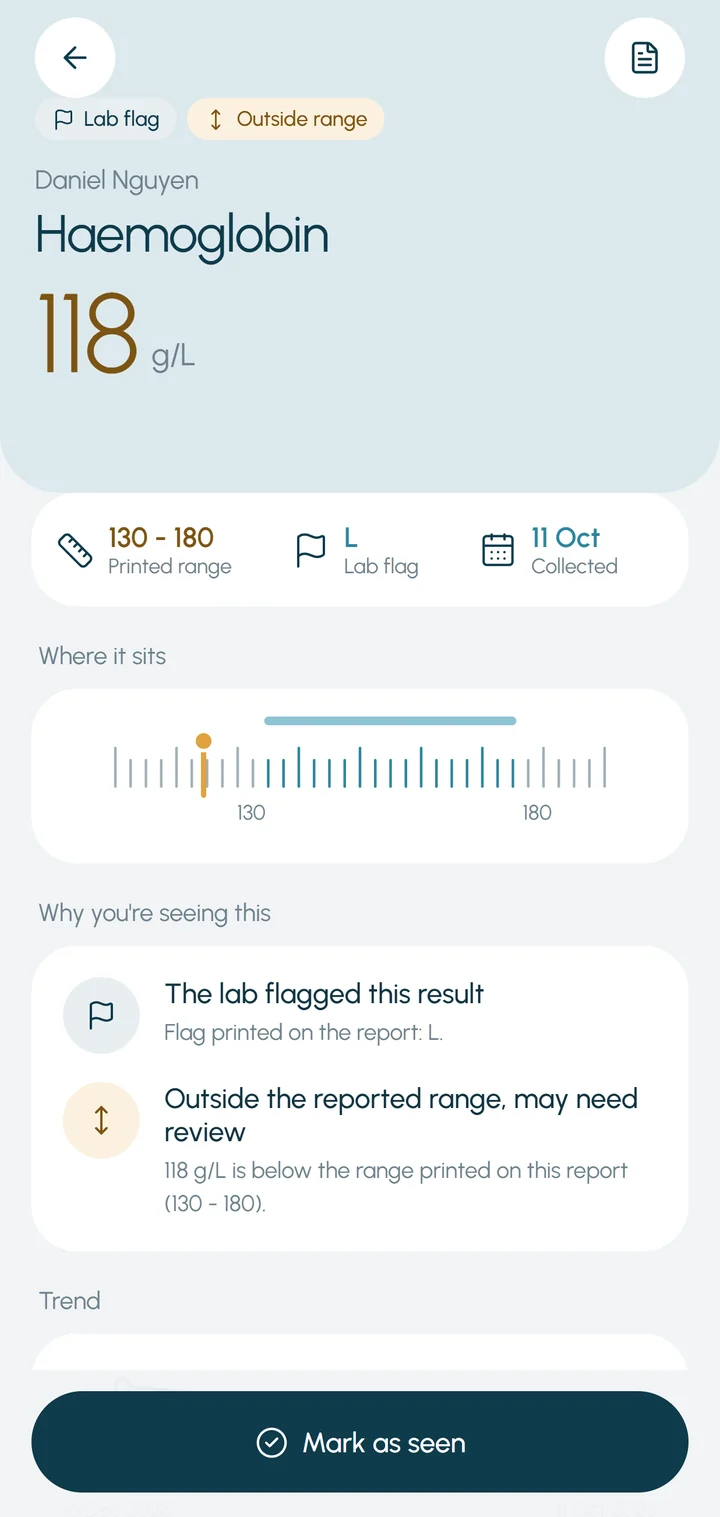
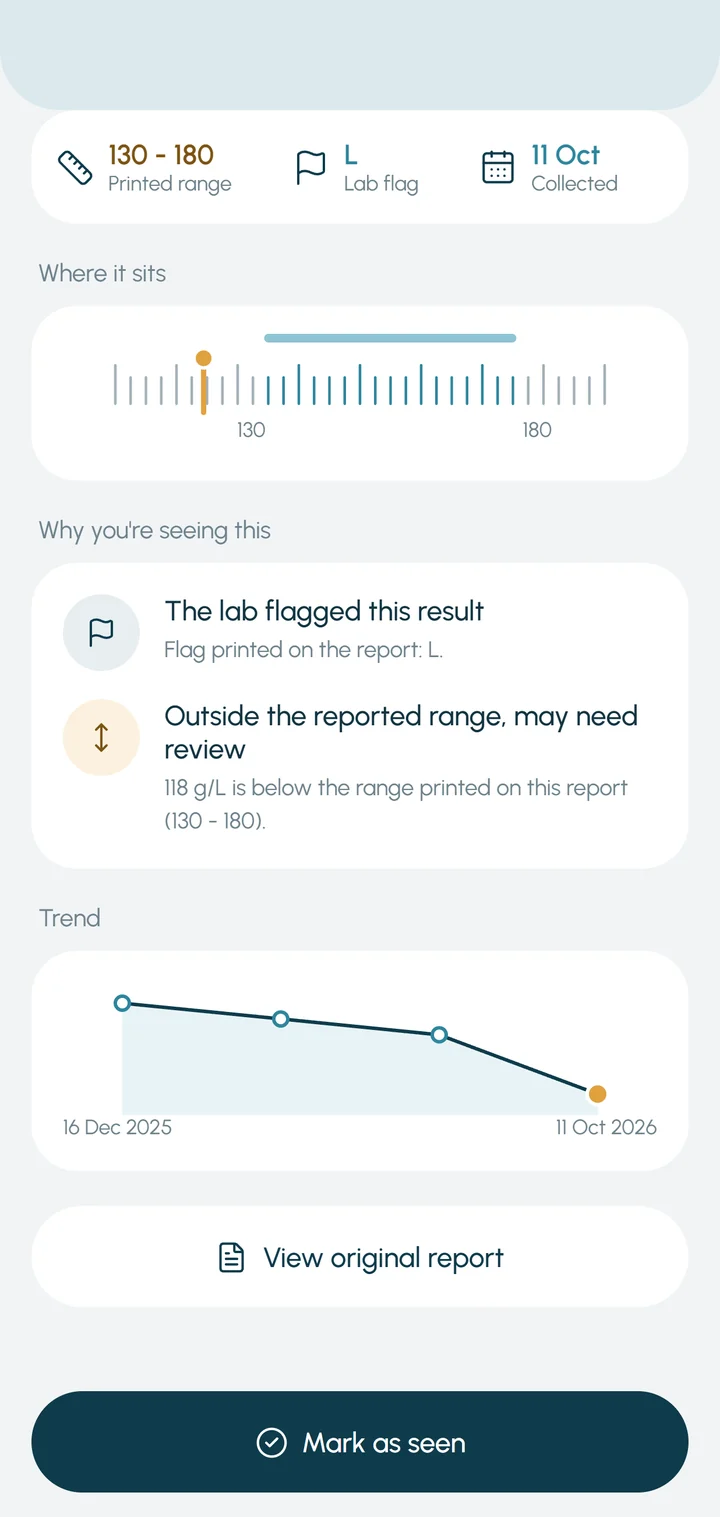
If the lab marks a result as abnormal, you hear about it.
Each value is compared with the range printed on that patient's report, not a generic table.
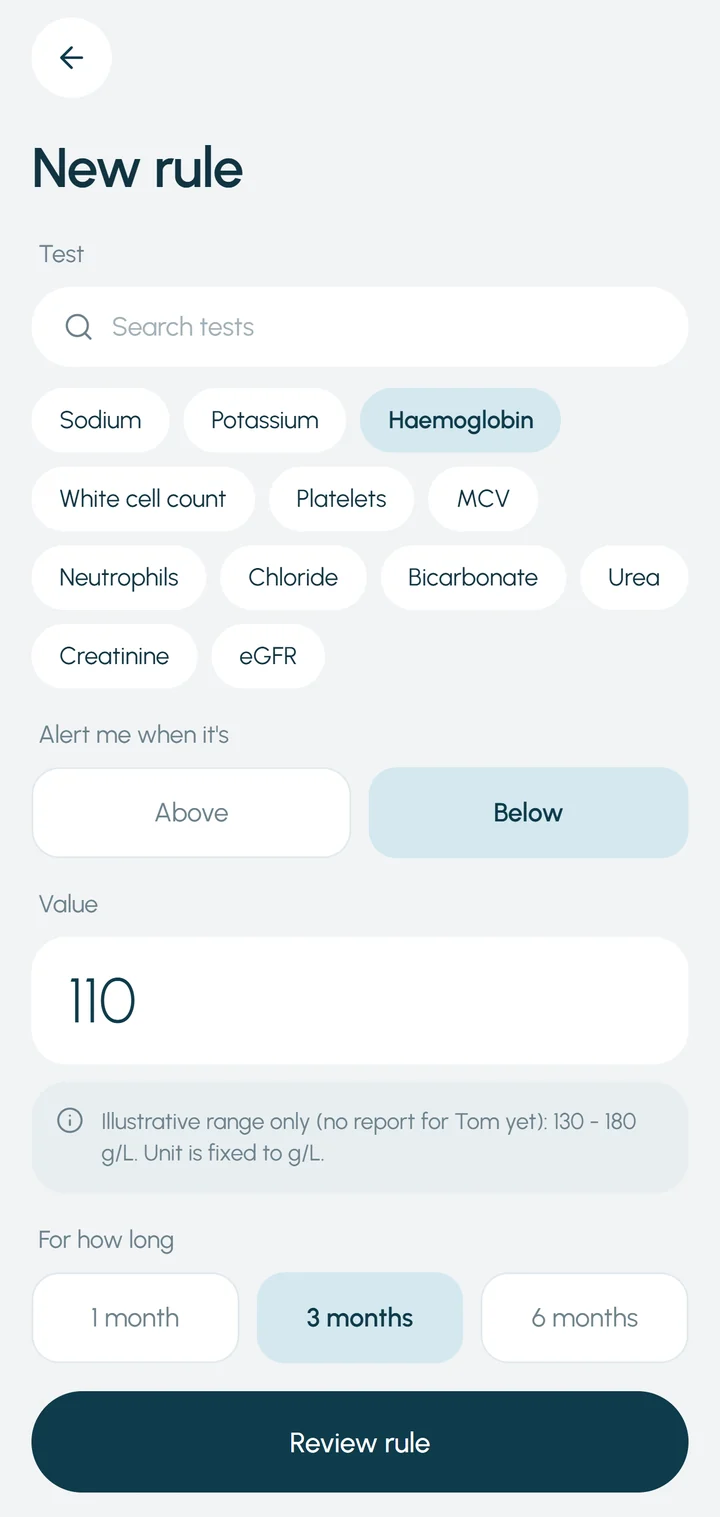
Set a rule for one patient. A matching value alerts you, even when it's inside the range and unflagged.
A value that isn't a plain number, like “<0.01”, gets its own alert. BloodLine never stays silent.
BloodLine doesn't diagnose, decide urgency, automate follow-up, or replace your inbox review or the lab's phone call.
Pathology reports now go to My Health Record by default, mostly without the old 7‑day delay. A patient may read a result before anyone at the practice has acted on it.
The RACGP's 6th edition Standards keep a dedicated criterion for follow‑up systems: CG6.
Australian Clinical Labs texts doctors about high‑risk results and asks them to confirm. It covers one lab, judged by that lab's own criteria.
Halo Connect is the only connection method for Bp Omni, and Bp Premier integrations are moving to it.
Labs change nothing. BloodLine's first integration route is Best Practice, through Halo Connect.
Email, SMS and calls only ask you to open the app.
OCR only copies what's printed. Plain, deterministic code does every check.
Every check, message and action is recorded.
BloodLine never diagnoses or decides urgency. You still review every result.
We'd love to hear from GPs, practice managers and investors. Find the team on LinkedIn.